NeuroSys / Home
2 New Pubs Position Open
Paper accepted at the Journal of Neural Engineering Paper accepted at 51st IEEE International Conference on Acoustics, Speech, and Signal Processing ICASSP 2026! Paper accepted at the Journal of Neural Engineering Paper accepted at 51st IEEE International Conference on Acoustics, Speech, and Signal Processing ICASSP 2026! Paper accepted at the Journal of Neural Engineering Paper accepted at 51st IEEE International Conference on Acoustics, Speech, and Signal Processing ICASSP 2026!
Electrical Engineering · IIT Mandi · Est. 2023
Neural Systems & Signal Intelligence Laboratory

Decoding the
language
of the brain.

We develop computational frameworks and foundation models for neural signal analysis — with clinical brain-computer interfaces and AI-assisted neurological diagnostics at the centre.

Latest News
Jan 2026Publication
ICASSP 2026 accepted — Femtomodels for EEG Artifact Removal
Dec 2025Publication
JNE accepted — Clinical readiness of AI in EEG-based epilepsy diagnosis
Jun 2025Publication
MLSP 2025 accepted — MicroWaveNet for Robust EEG Denoising
All announcements
Research Spotlight
01 / ARTIFACT REMOVAL & PRETRAINING
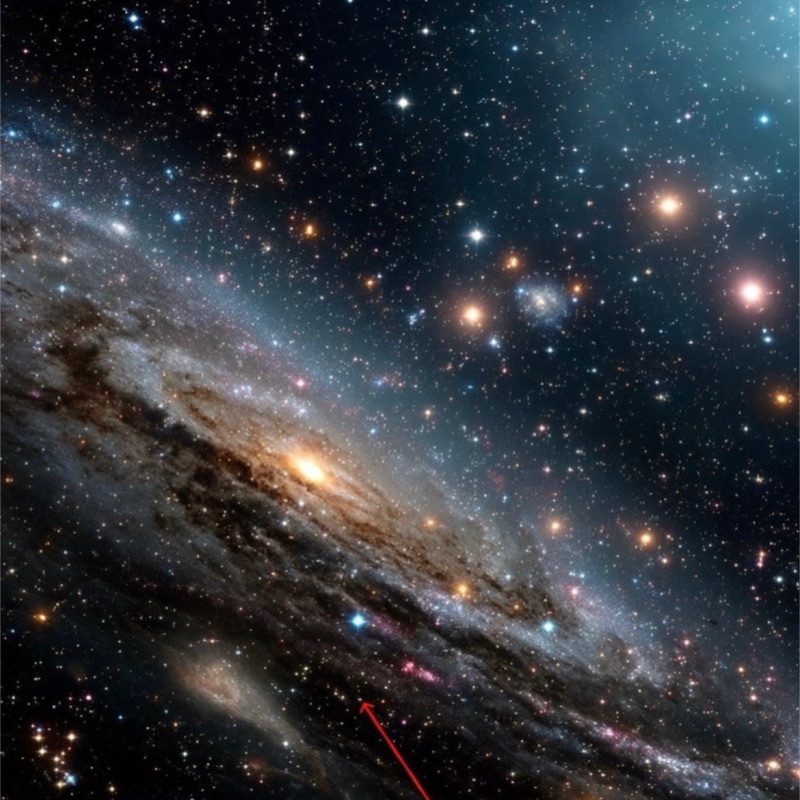
Robust Parameter Lower-Bound for Denoising
Generalisable EOG denoising relies on precise parameter optimization without sacrificing clinical utility. Our frameworks aim at minimizing network complexity whilst maximizing preservation of neurological biomarkers.
All research areas
Research Areas

Our Work

Computational approaches to understanding neural dynamics — with clinical translation at the core.

Active Research Threads — click to expand

01 / EEG FOUNDATION MODELS
EEG Foundation Models & Self-Supervised Learning
Large-scale pretraining frameworks tailored for EEG, incorporating pathology-aware objectives and information-theoretic constraints that align representations with clinical semantics.
Self-SupervisedTransformerIIBMulti-Center
02 / BRAIN-COMPUTER INTERFACES
🧠
Brain-Computer Interfaces & Assistive Neurotechnology
Real-time EEG decoding for communication, motor rehabilitation, and attention monitoring. Full-stack pipelines from streaming acquisition to online adaptive classification.
Real-TimeSSVEPP300Muse
03 / DYNAMICAL SYSTEMS
🌀
Chaos Theory & Neural Dynamics
Treating EEG as observations from chaotic attractors — extracting invariant geometric and spectral features via Lyapunov exponents, fractal dimensions, and recurrence quantification.
Chaos TheoryLyapunovAttractorRQA
04 / CLINICAL AI
🏥
Clinical Neurological AI & Epilepsy Diagnosis
Multi-center validation for distinguishing epilepsy from non-epileptic seizure mimickers, with rigorous cross-center evaluation addressing systematic data heterogeneity.
EpilepsyIHBASBiomarkersXAI
05 / BIO-INSPIRED ARCHITECTURES
🔬
Biologically-Inspired Neural Architectures
Spiking neural networks, reservoir computing, and E/I-balanced attractor networks (BPAN) guided by Dale's law — applied to anytime inference on temporal signals.
SNNE/I BalanceBPANReservoir
06 / INFORMATION THEORY
📡
Information Theory & Neural Signal Fidelity
The IFB framework quantifies Gaussian mutual information rates between latent neural sources and EEG observations, grounding representation learning in rigorous theory.
IFBMI RateICASource Sep.

Collaborating Institutions

IHBAS, Delhi
MAX Superspeciality Hospital
MEDICADE
AIIMS Delhi
IIT Delhi
NIMHANS Bangalore
Academic Output

Publications

Peer-reviewed work at the intersection of signal processing, machine learning, and clinical neuroscience.

All
Conference
Journal
Workshop
2026
2025
2026
ICASSP 2026 · Conference
FEMTOMODELS FOR EEG ARTIFACT REMOVAL: A PARAMETER LOWER-BOUND FOR GENERALISABLE EOG DENOISING
Details not available yet but would soon be available
2025
Journal of Neural Engineering · Journal
Evaluating the clinical readiness of artificial intelligence in EEG-based epilepsy diagnosis
Jeet B. Lahiri, P. Agarwal, S. Kushwaha, M. Singh, S. Panwar
A comprehensive evaluation of the clinical readiness of AI models in diagnosing epilepsy using EEG signals.
2025
IEEE MLSP 2025 · Conference
MicroWaveNet: Lightweight CBAM-Augmented Wavelet-Attentive Networks for Robust EEG Denoising
Jeet B. Lahiri, A. Kulkarni, S. Panwar
A lightweight approach using CBAM-augmented wavelet-attentive networks specifically designed for efficient and robust EEG signal denoising.
People

The Team

Researchers at the intersection of signal processing, artificial intelligence, and clinical neuroscience.

Dr. Siddharth Panwar
Principal Investigator
Dr. Siddharth Panwar
Assistant Professor · Electrical Engineering · IIT Mandi
Dr. Siddharth Panwar received his B.S. from the University of Arizona and M.S. from Stanford University, both in Electrical Engineering. After designing analog circuits at Mosys Inc., he obtained his Ph.D. from IIT Delhi, focusing on engineering novel computational biomarkers from neural signals. He directs research at the intersection of multivariate signal processing, machine learning, and diagnostic medicine, employing a data-centric AI approach.
Data-Centric MLPredictive ModelingMultivariate Signal Processing
Ph.D. Scholar
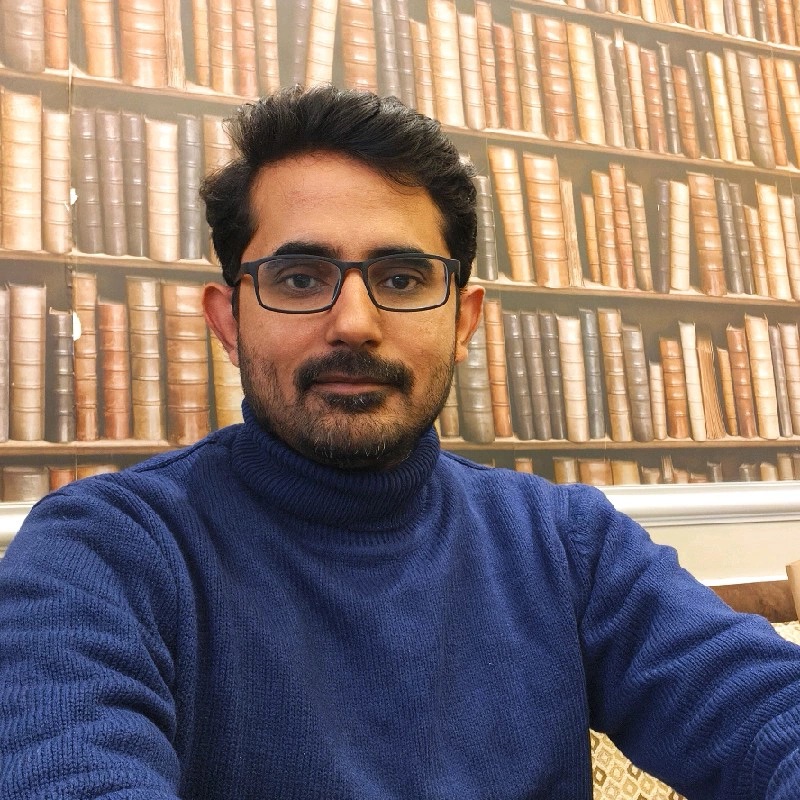
Jeet
IIT Mandi
Information Fidelity Bound of EEG, Neuro-inspired architectures and computing, analysis of multivariate time series, computational neuropathology diagnostic systems, EEG based foundation model.
Foundation ModelsTime SeriesNeuro-inspired AI
Ph.D. Scholar
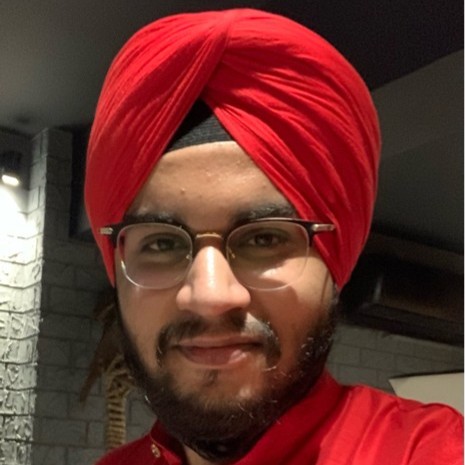
Jasmeet
IIT Mandi
Deep Learning, Biosignals & Neural Signal Processing, Neural Information Theories, Brain-Computer Interfaces & Neuroimaging Hardware.
Deep LearningBCINeuroimaging
Ph.D. Scholar
Nalin
IIT Mandi
Investigates biological computation through the lens of theoretical physics. By applying information-theoretic limits and Stochastic Physics principles to biological connectomes, he develops spiking neural models that bridge biological plasticity with energy-efficient AI.
Neuromorphic AIInformation Theory
Ph.D. Scholar
Vinay
IIT Mandi
Studies brain activity through the lens of nonlinear dynamical systems. Uses dynamical time-series analysis and multivariate signal processing to quantify brain-state transitions, extracting interpretable markers of neural dynamics.
Nonlinear DynamicsBrain-State
M.Tech. (By Research)
Uthamkumar
IIT Mandi
EMG signal decoding, AI powered prosthetics, Deep learning.
EMGProstheticsDeep Learning
Writing

Lab Blog

Research notes, technical essays, and commentary from the lab.

10 Dec 2024
Why Data-Centric ML is Critical for Clinical EEG
In modern machine learning, simply adding more data and parameters is frequently celebrated as the primary solution. However, within clinical diagnostics, the quality of the signal and expert curation outweigh raw volume. In this post, we discuss why engineering data carefully using multivariate signal processing yields vastly superior diagnostic predictive models.
Jeet · 6 min read
Read essay
More Posts
Navigating the Trade-off Between Model Complexity and Clinical Data Size
Jeet · 28 Oct 2024
Nonlinear Dynamical Analysis for Neural Signals
Jeet · 12 Sep 2024
Building Lightweight Models for Real-time Artifact Removal
Jeet · 14 Aug 2024
The Role of Information Fidelity in Brain-State Transitions
Jeet · 22 Jul 2024
28 Oct 2024 · Jeet
Model Complexity and Data Size
Large neural networks overfit rapidly on sparse medical data. We investigate methodologies to reduce network overhead via specialized inductive biases and signal transformations.
Read more
12 Sep 2024 · Jeet
Nonlinear Dynamics for Brain Signals
Examining neural activity as high-dimensional chaotic attractors to detect subtle state shifts missed by traditional Fourier-based spectral analysis.
Read more
14 Aug 2024 · Jeet
Lightweight EEG Artifact Removal
An exploration into creating femtomodels that effectively remove EOG artifacts without disrupting underlying clinical markers.
Read more
22 Jul 2024 · Jeet
Information Fidelity & Brain States
Applying principles of information theory to strictly quantify the preservation of neuronal dynamics in algorithmic reconstruction and signal compression pipelines.
Read more
15 Jun 2024 · Jeet
Clinical Readiness of AI Frameworks
What does it truly take to push an epilepsy detection model from a controlled benchmark environment to full clinical deployment?
Read more
Updates

Announcements

News, milestones, and opportunities from the lab.

All
Publications
January
2026
Publication
Paper accepted at ICASSP 2026
Femtomodels for EEG Artifact Removal: A Parameter Lower-Bound for Generalisable EOG Denoising, paper accepted at ICASSP 2026, the most prestigious flagship conference of the IEEE Signal Processing Society (IEEE ICASSP 2026)!
December
2025
Publication
Paper accepted at the Journal of Neural Engineering
Evaluating the clinical readiness of artificial intelligence in EEG-Based epilepsy diagnosis, paper accepted at the Journal of Neural Engineering!
June
2025
Publication
Paper accepted at IEEE MLSP 2025
MicroWaveNet: Lightweight CBAM-Augmented Wavelet-Attentive Networks for Robust EEG Denoising, paper accepted at the 35th IEEE International Workshop on Machine Learning for Signal Processing (IEEE MLSP 2025)!
Get in Touch

Contact & Join

We welcome inquiries from prospective students, academic collaborators, and clinical partners.

Principal Investigator
Dr. Siddharth Panwar
siddharthpanwar@iitmandi.ac.in
Location
School of Computing and Electrical Engineering (SCEE)
IIT Mandi, North Campus
Mandi, HP 175075

Joining the Lab

PhD Students
Strong fundamentals in signal processing, machine learning, or neuroscience. Admission via IIT Mandi's PhD programme. Send CV, transcripts, and a 1-page research statement to the PI.
Rolling admissions
MTech Thesis
IIT Mandi MTech students in EE or related departments may pursue thesis work with the lab. Reach out at the start of your second semester. Subject to current lab capacity.
IIT Mandi internal
Research Internships
Summer internships for outstanding B.Tech and M.Sc students, with active participation in ongoing research. Limited spots; applications open each January.
May – July annually
Clinical & Academic Collaboration
We collaborate with clinical institutions, academic groups, and industry. Hospitals or companies interested in neurological AI are encouraged to reach out directly.
Clinicians welcome
[esc] close
Research Area 01
EEG Foundation Models & Self-Supervised Learning

We design large-scale pretraining frameworks tailored for EEG. Unlike vision or language, EEG presents unique challenges: high inter-subject variability, electrode placement sensitivity, and subtle but clinically critical temporal patterns.

[esc] close
Research Area 02
Brain-Computer Interfaces & Assistive Neurotechnology

Real-time BCI pipelines using research-grade and consumer-grade EEG. The full stack: acquisition, conditioning, feature extraction, classification, and online adaptation.

[esc] close
Research Area 03
Chaos Theory & Neural Dynamics

The brain is a high-dimensional nonlinear dynamical system, and EEG captures its projection onto electrode space. We extract invariant geometric features: Lyapunov exponents, correlation dimensions, and recurrence quantification measures.

[esc] close
Research Area 04
Clinical Neurological AI & Epilepsy Diagnosis

Distinguishing epilepsy from psychogenic non-epileptic seizures is one of the most challenging problems in clinical neurology, with misdiagnosis rates exceeding 20% globally.

[esc] close
Research Area 05
Biologically-Inspired Neural Architectures

SNNs for temporal sparse coding, reservoir computing for dynamical state estimation, and E/I-balanced attractor networks guided by biological plausibility principles to perform efficient signal modeling.

[esc] close
Research Area 06
Information Theory & Neural Signal Fidelity

The Information Fidelity Bound provides a rigorous basis for quantifying mutual information rates in latent neural source processes, helping formalize representation learning metrics without relying on surrogate performance alone.

[esc] close
Essay · Jeet · 10 Dec 2024
Why Data-Centric ML is Critical for Clinical EEG

The prevailing wisdom in modern machine learning points towards larger networks and boundless datasets. For language and vision, this yields spectacular results. We argue that for medical diagnostics, particularly clinical EEG, this approach is severely handicapped.

Clinical data is sparse, heterogenous, and costly. By embedding domain knowledge into our signal extraction pipelines—adopting a data-centric methodology over a model-centric one—we achieve a more interpretable, stable, and accurate predictive model ready for real-world diagnostic applications.

[esc] close
Technical Note · Jeet · 28 Oct 2024
Model Complexity and Data Size

A deep neural network trained on a hundred EEG scans will almost undoubtedly memorize the training set, failing to generalize to unseen hospitals or device variations. We examine techniques to reduce parameter count explicitly without diminishing representational capacity, finding an elegant balance between model limits and data sparsity.

[esc] close
Essay · Jeet · 12 Sep 2024
Nonlinear Dynamical Analysis for Neural Signals

While spectral bands (Alpha, Beta, Gamma) offer an intuitive look into cognitive states, they assume stationarity over specific windows. EEG signals trace chaotic trajectories. We highlight how measuring the rate of trajectory divergence can uncover robust computational biomarkers missed by standard Fourier methods.

[esc] close
Commentary · Jeet · 14 Aug 2024
Building Lightweight Models for Real-time Artifact Removal

Artifacts like eye-blinks (EOG) routinely ruin EEG recordings. Using heavy foundational models to scrub out noise is computationally impractical for portable BCI units. Our recent work pushes the boundary toward minimal-parameter structures—femtomodels—capable of generalizing artifact removal seamlessly across multiple environments.

[esc] close
Tutorial · Jeet · 22 Jul 2024
Information Fidelity & Brain States

When transferring a continuous analog neural signal into a low-dimensional discrete representation, information is inevitably lost. How do we ensure the lost information wasn't clinically vital? We break down the mathematical constraints necessary to preserve fidelity in machine representations.

[esc] close
Essay · Jeet · 15 Jun 2024
Clinical Readiness of AI Frameworks

An accuracy metric achieved during K-fold cross-validation is not an indicator of clinical readiness. Models consistently fail when moved to new wards, uncalibrated hardware, or diverse patient demographics. Preparing an AI tool for true clinical integration requires exhaustive evaluations against data-leakage, calibration drift, and interpretability requirements.